

The Nubian Museum
Nubia’s name is from the ancient Egyptian word ”Nbu,” which means land of gold. One of the places that reflect Nubian life, traditions, and culture from prehistoric times to the construction of the High Dam is the Nubian Museum. This Museum is located on the eastern banks of the Nile in Aswan, 899 km from Cairo.
The History of the Nubian Museum
During the Aswan High Dam construction in the 1960s, many Aswan monuments were submerged by the Nile’s water, and a large part of the Nubian land sank. UNESCO helped Egypt build a museum to preserve the Pharaonic and Nubian monuments for visitors. The cost of the Museum was 60 million Egyptian pounds, and it was designed by the architect El Hakim who is also known as the author of the Luxor Museum building. The Museum was built 11 years. In 1986 the foundation stone of the Nubian Museum was laid, and in 1997 it was opened to the public. In 2001, the Nubian Museum won the Aga Khan Award for Architecture.
The Construction of the Nubian Museum
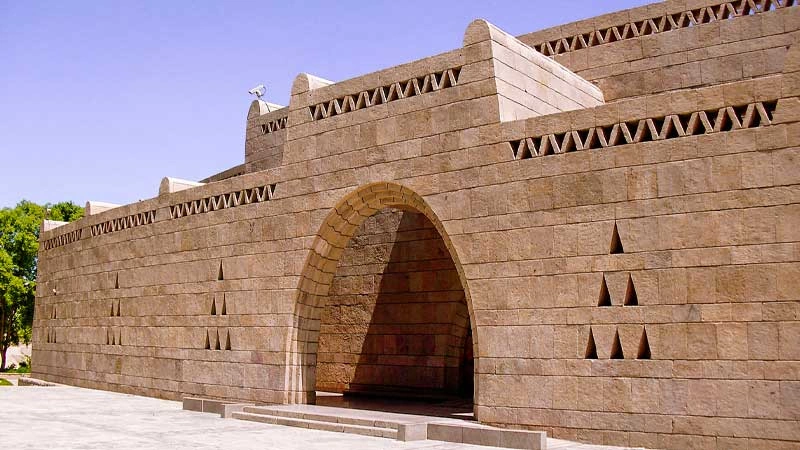
It is 50 thousand m 2, only 7 thousand is the Museum building, and the rest is a large garden. The Museum houses 3,000 monuments taken from its temples, tombs, and houses from different eras; prehistoric, pharaonic, Coptic, and Islamic. Only 90 pieces are from the free exhibition, and the others in the inner rooms contain 50 priceless details dating from prehistoric times, 503 from Pharaonic times, 52 from Coptic times, 103 from Islamic times, 140 from the Nubian era, as well as 360 pieces from Aswan.
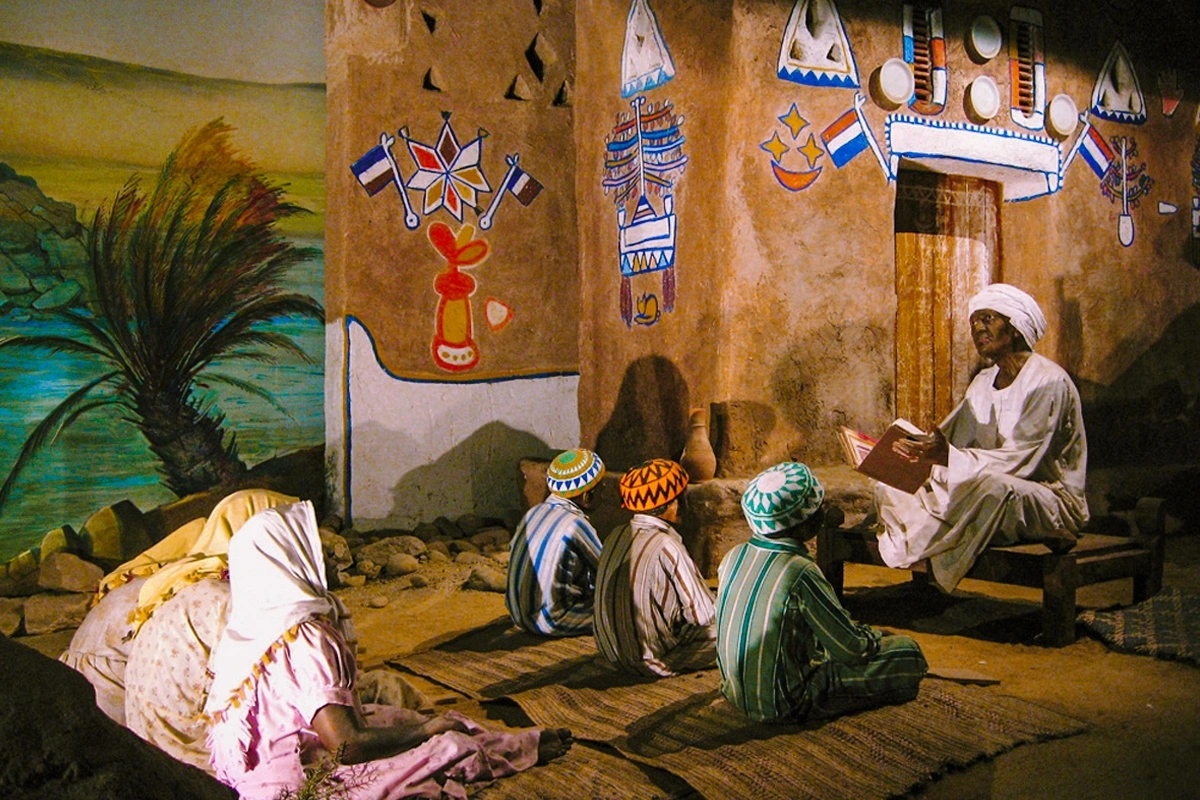
From Outside: At the access to the garden, there is an obelisk from the Temple of Abu Simbel. In the garden, there are some statues from various Nubian eras, a typical Nubian-style house with a brightly painted facade and daily scenes, a 500-seat open-air theater, Fatimid-style decorated minaret, an artificial canal surrounded by local flora and fauna that runs through the entire garden and symbolically represents the Nile River.
From Inside: The Museum building is worth three pesos.
The basement: contains the main exhibition hall, restoration laboratories, workshops, antique shops, a reception center, and an open theater.
The ground floor includes the main entrance, an exhibition hall, an auditorium, a VIP room, security and administration rooms, and a general administration room for museums.
The first floor includes the cafeteria, library, Museum, photography and microfilm rooms, museum administration, and services.
Among its virtual exhibits: is the 12 m high statue of Ramses II, surrounding it with other monuments from various eras. There are also 16 statues of famous Nubian kings, a model of the Temple of Philae, a stone painting of Amenhotep, supplies and ornaments for horses, tombstones, a statue of the “Ba” representing “soul,” a stone painting of Tanutamani, a model of an Islamic tomb, the figure of King Khafra, items from the excavations of the Palace of Ibrim, mummies of the sacred rams of the god Khnum, wooden coffin. Statues of the country’s rulers of Nubian origin, Pharaoh Taharqo of the 25th dynasty, his sister Amenirdis II, and Anjnesneferibra II, were brought from the Egyptian Museum in Cairo.
0 Comment