


About Lake Nasser
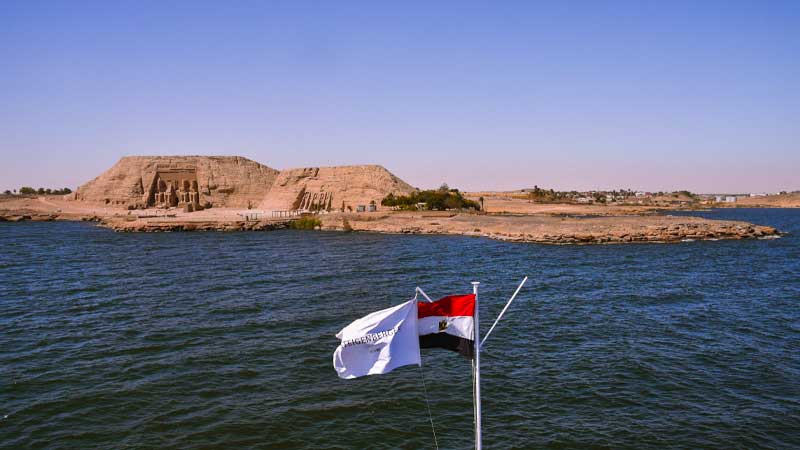
Stretching south from Aswan, nearly 350 kilometers (550 miles) beyond Egypt’s southern border and into northern Sudan, Lake Nasser is the massive freshwater reservoir formed by the construction of the Aswan High Dam during the 1960s.
High Dam replaced a smaller dam completed by the British colonial government in 1902, which turned out to be too small to control the river’s flow. Construction of the Dam began in 1960 as part of a significant development initiative by President Gamal Abdel Nasser.
The Dam was intended to increase agricultural production, provide flood protection throughout the Nile Valley, and provide access to electricity for many of Egypt’s villages.
The Dam was controversial because rising lake waters forced the displacement of more than 100,000 Nubians in Egypt and northern Sudan and threatened to flood many important monuments, including the Abu Simbel temples.
Regardless of the costs or benefits of the High Dam project, the Dam today stands as an impressive engineering marvel, and the massive reservoir behind it provides a unique body of water in the arid climate of southern Egypt.
Lake Nasser has created a new economy based on fishing in its vast waters and has helped develop tourism in southern Egypt. With the help of international organizations, many of the monuments threatened by rising waters have been relocated to higher ground along the lake’s shores, where tourists can easily visit them by boat.
Although the displacement of the Nubian people remains a controversial political issue, many of these people now live in and around Aswan, managing to keep their unique culture alive with additional income from tourism.
Lake Nasser offers a relaxing gateway to the south. Lake Nasser Nile cruise ships take visitors from south of Aswan to visit the monuments along its shores, including Philae Temple, Abu Simbel, Kalabsha Temple, Qasr Ibrim, and many others.
The lake waters are the only place in Egypt where the infamous Nile crocodiles can still be seen, as their populations have been reduced below the Dam and the stunning desert scenery along the shores offers a perfect opportunity to relax. For several days sailing through the historical sites of ancient Nubia.
Lake Nasser Fishing
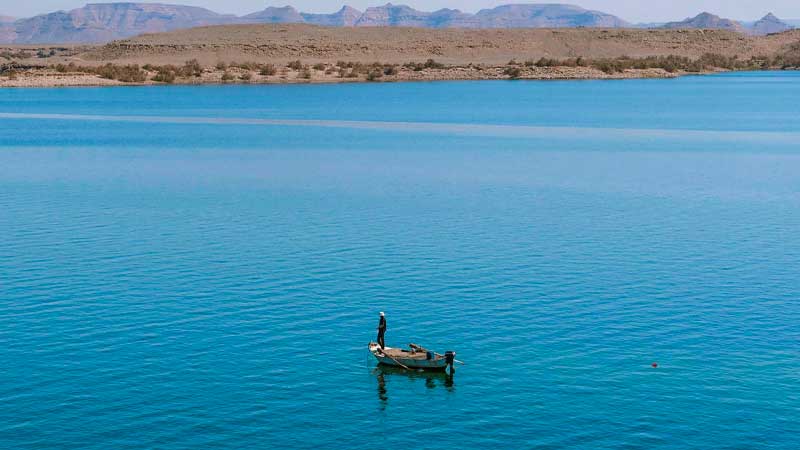
Since the construction of the Dam, an entirely new attraction has been developed in the waters of Lake Nasser. The depth and size of the lake have allowed various species of fish that live in the Nile system to thrive and grow to great heights.
As a result, a nascent sport fishing industry has evolved where visitors come for the opportunity to catch some of the world’s largest freshwater fish. Outfitters take fishermen on day trips, but longer trips are more popular, allowing boats to reach remote areas for private fishing. Fishing is done from small boats as well as from the shore.
Kalabsha Temple
Located within sight of the High Dam, the Kalabsha Temple is often the first stop on any Lake Nasser cruise. It was moved to this location from its original location 30 miles to the south after the construction of the Dam.
The temple’s construction began at the end of the Ptolemaic dynasty and was completed under the rule of the Roman Emperor Augustus. The result is an exciting mix of Egyptian and Roman themes with images of Roman emperors and pharaohs worshiping Egyptian gods. The temple was dedicated to the Nubian god Mandalas.
It has a large tower connected to the rest of the complex by a wall, creating a closed space. There are stairs to the roof, offering a great view of the lake and back to the Presa Alta.
Amada Temple
Approximately 110 miles south of the High Dam, the Temple of Amada is the oldest of the monuments around Lake Nasser. Dating back to the 18th dynasty of the New Kingdom, the temple predates Ramses II and Abu Simbel by about two hundred years; however, as is typical of the great pharaoh of Egypt, inside is the mark of Ramses and that of his son Merenptah.
Qasr Ibrim
It is a rocky island in the middle of Lake Nasser. This is the only monument around the lake that has remained in its original location. Qasr Ibrim used to protect a prosperous city, but the lake submerged most of the ruins. During the Middle Ages, this area rose to such prominence that the most notable ruins visible on the island are the remains of a great cathedral that once stood here. The site was inhabited until the mid-19th century, when it fell into disuse.
0 Comment