

Pompey’s Pillar
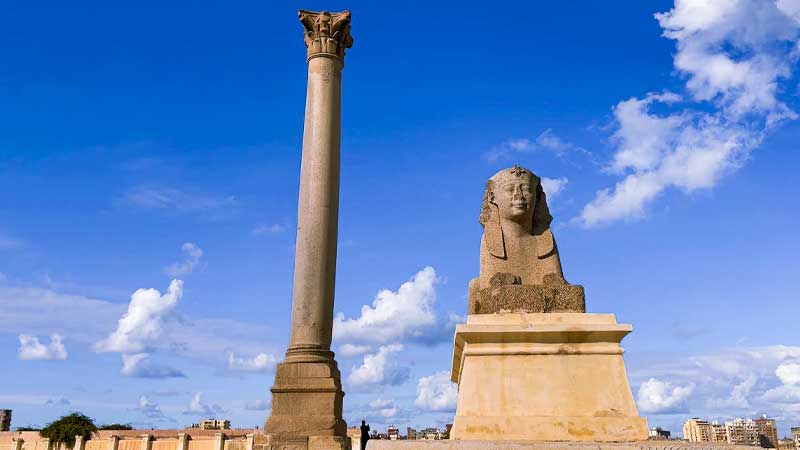
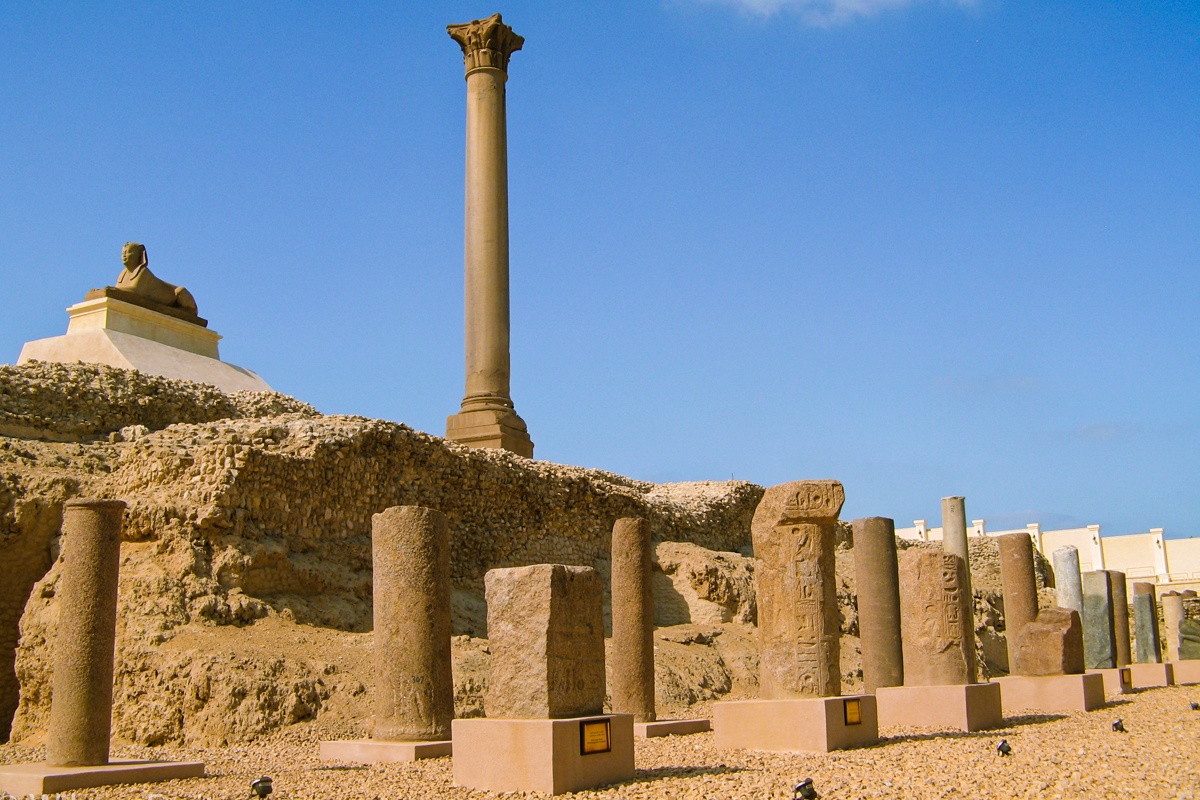
Pompey’s Pillar in Alexandria is a triumphal column and one of the giant monoliths of Egyptian antiquity standing on a hill covered by ancient walls and architectural fragments. El Pilar is located in the “Karmoz” neighborhood, south of Alexandria, near the Catacombs and the Arab cemetery. Pompey’s Pillar is the largest in Egypt, and it is considered an incredible architecture surrounded by mysteries about its history.
The Story of Pompey’s Pillar
It was built in 297 in the Roman period. The name knows Pompey of the Crusaders, who believed that the head of Pompey (a Roman politician and general) was assassinated by Ptolemy XIII (Cleopatra’s brother and husband), was buried in this place, but this theory is not correct. The correct thing is that the Pillar was built in honor of Emperor Diocletian for his victory in the battle with General Aquileus because a statue of Diocletian was initially found under its base, and there are inscriptions on the ground that confirm this theory.
The Construction of Pompey’s Pillar
it is a monolithic column built from the red granite quarried in Aswan. The pillar height without the base and the capital is 20.46 meters, and the base diameter is 2.71 meters. The total height of the Pillar with the floor is 26.85 meters, and its weight is 285 tons.
Around Pompey’s Pillar
It is located in the middle of the ruins of the Temple of Serapeum, which was the main temple of Alexander the Great in Ptolemaic times and was dedicated to the god Serapis (The Greco-Egyptian god and protector of the city). This temple was destroyed in 391 AD. C. by Roman soldiers or the Christian mafia. It is believed that Pompey’s Pillar is the only survivor of the temple, in addition to two statues in the form of sphinxes, built of pink granite in the period of Ptolemy VI, one of which has hieroglyphs of the king “Horemheb” of the dynasty XVIII.
0 Comment