

Where is Karnak Temple located?
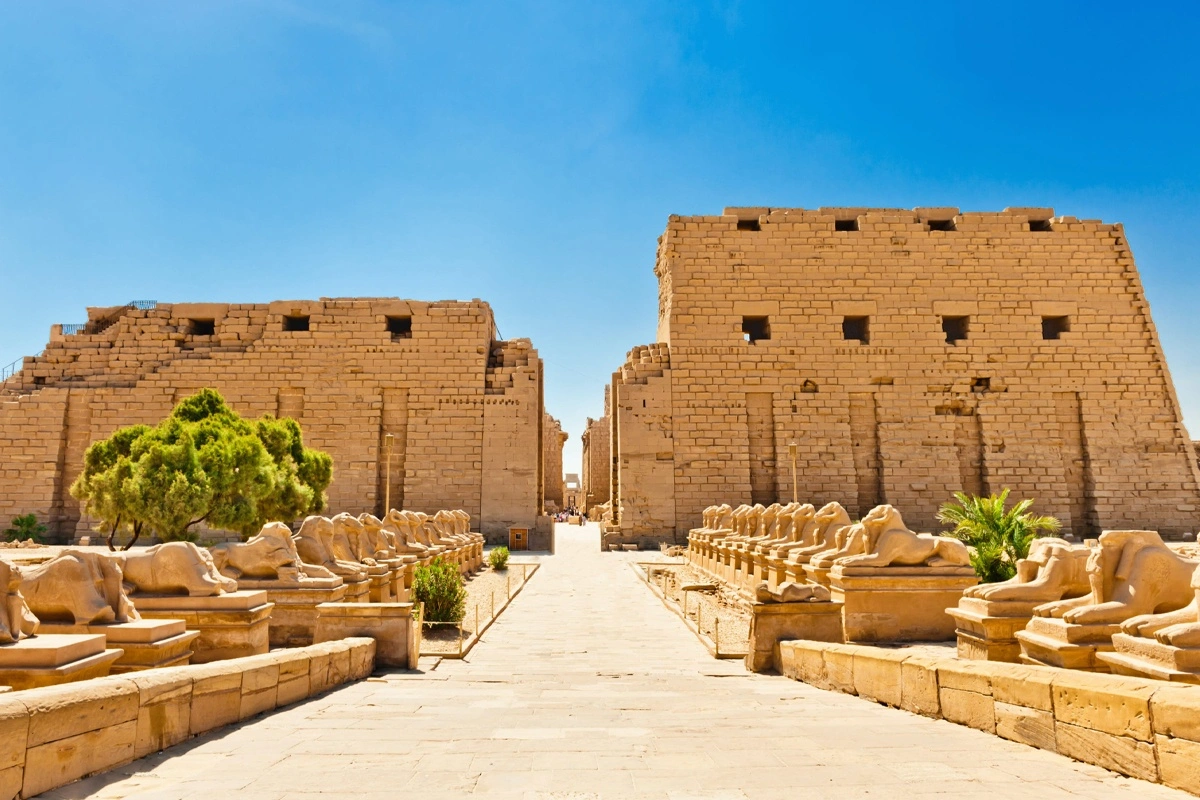
The Karnak Temple is the largest temple in the world and the most significant religious building ever built. It is located in the city of Luxor, “Thebes.”
Karnak Temple is known as the Temple of Amun; it was called “I pet-Isu,” meaning “The Choicest of Places” in the Middle Kingdom, also known as “Pr-In,” meaning “House of Amun.” From 2055 BC to around 100 AD, it was built for 2000 years.
What Does the Temple of Karnak Consist of?
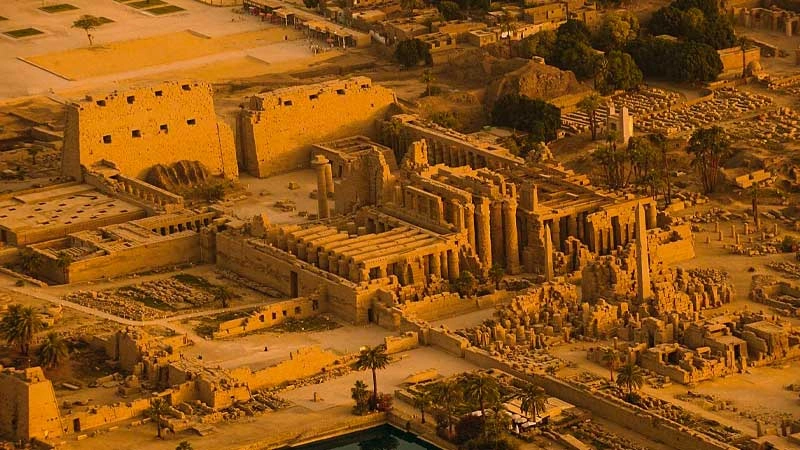
The Karnak Temple consists of a group of temples. Their most significant space and the center of the temple covers sixty-one acres and belong to Amon-Ra (the male God of Thebes). We can see in the south of the central area of the wife him the Mut, and more temples such as the Temple of Khonsu, the Temple of Ptah, the Temple of the Ipt, the Temple of Osiris, and the Temple of Montu. Karnak Temple was not only for the gods but also for the Egyptian rulers who wished to be memorized; that’s why they left their architectural mark throughout the centuries, from the beginning of the old kingdom, the middle kingdom, the new kingdom, and the Ptolemaic Dynasty.
The First Pylon: –
An avenue of ram-headed sphinxes leads to the first tower. The ram’s head symbolizes the god Amun. There are 20 rams on each side built to protect the temple. The first tower is the main entrance to the temple, and the last building was built at Karnak.
The Great Open Courtyard:-
The large courtyard is 100 m long and 80 m wide; it contains ten columns with papyrus capitals. Each column is 21 m high. Only one column exists, known as the kiosk of Taharqa, the fourth king of the 25th Dynasty. There is also the statue of Ramses II that represents the king wearing the double crown of Upper and Lower Egypt; at his feet, we find his queen’s wife.
The Great Hypostyle Hall: –
The great hypostyle hall is the most fantastic building in Karnak. It is 103 m long and 52 m wide. It contains 134 gigantic stone columns; the 12 most enormous columns reach a height of 22.40 m with a diameter of 3.5 m, and the other 122 columns are 14.75 m high. The hall was initially built by King Seti, who ruled from 1290 to 1279 BC.
The outer walls of the north hall describe the battle of Seti, while the south wall is inscribed with Ramses II’s peace treaty with the Hittites.
The Sacred Lake:-
A sacred lake is 120m by 77m, making it the largest. King Tuthmosis III (1473-1458 BC) excavated it. Priests used it for purification and other rituals, such as navigation. It was the home of the sacred geese of Amun. The lake is lined with stone and has stairs to descend into the water. We can find the storehouses and the priests’ chambers around the lake.
0 Comment