


About Valley of the Whales
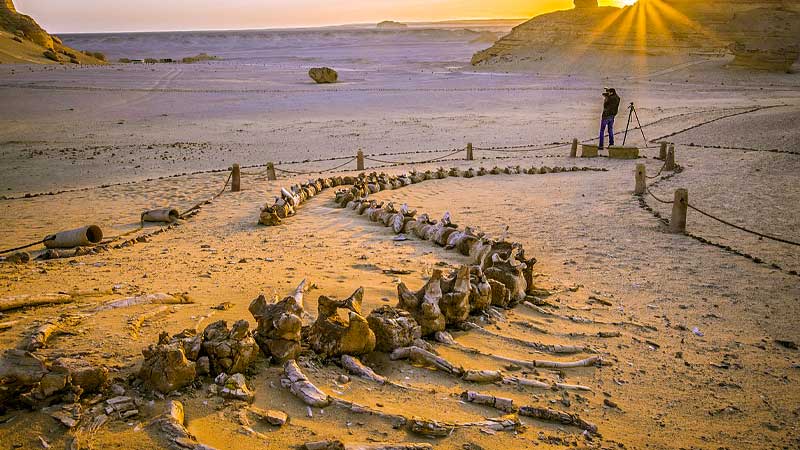
Whales Valley, or Wadi al Hitan, is an area of fossils northwest of the Wadi El-Rayan Reserve, dating back about 40 million years.
These excavations are of fossilized structures of primitive whales, shark teeth, shells, and other marine animals considered open museums.
There is also a short fossilized plant inside soft rocks. The Valley of the Whales is part of the protected area of Wadi El-Rayan (Wadi El-Rayan Protected Area). In 2005, it was declared a World Heritage Site by UNESCO due to the unique beauty of the landscape and the importance it encompasses Sciences.
If you want to spend the holidays in Egypt, check out our Egypt Vacation Packages & Trips and New Year and Christmas deals in Egypt.
Where is Valley of the Whales?
Wadi al Hitan, or the Valley of Wales, is located in the Western Desert of Egypt in the El Fayyoum Governorate near El Fayoum Oasis and contains valuable fossil finds of Archeocetus, the whale’s ancestor.
These testimonies represent one of the most critical stages in the evolution or passage of this mammal from terrestrial to marine life.
This archaeological site is an absolute world reference in support of evolutionary theory due to the number, concentration, and quality of the finds, collected in a protected area where the transition from the first evolutionary phase to that of the loss of hind limbs can be observed.
The remaining fossil materials offer an exciting reconstruction of the environmental and climatic conditions of the time. The importance of this area is recognized worldwide.
check out our Fayoum Attractions
How to get Valley of the Whales?
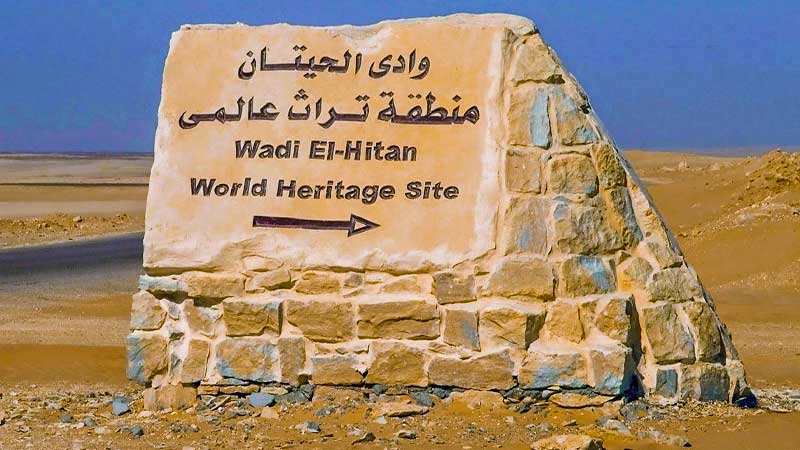
After a two-hour drive from Cairo and one hour from Giza, you will find yourself immersed in the incredible atmosphere of the Fayoum area, which, better than any other place, will make you feel what Ancient Egypt could have been like.
The remote valley of Wadi El-Hitan (Whale Valley) is more than an open-air museum: the rare and ancient finds of giant sharks and whale fossils prove that 40 to 50 million years ago, the area was completely submerged in the waters of what was the Tethys Sea.
For a long time, buried under the sand of the western desert, the fossils gradually emerged from the sand following the erosive phenomena, the effect of the winds, and finally, thanks to the archaeological excavations financed by National Geographic and the University of Michigan.
The landscape surrounding the valley exudes the same mysterious and fascinating atmosphere of its finds: rocks, mountains, and giant expanses of sand, dunes, and hills. If you have the opportunity, visit the valley toward sunset to witness the magical experience of colors and shapes which come to life at this time of day.
0 Comment