
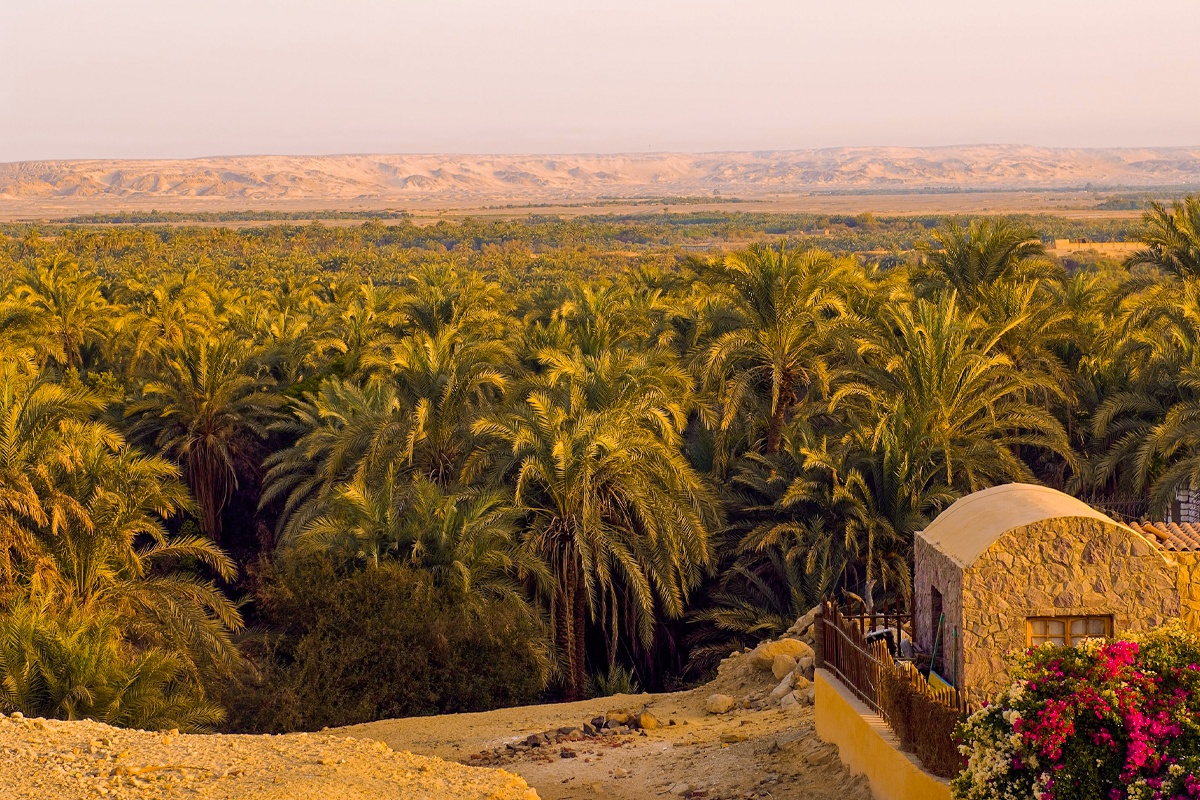

Dakhla Oasis
One of the most beautiful oases in Egypt is the Dakhla Oasis, the furthest Oasis from Cairo. It is between the Kharga and Farafra Oasis in the western desert, 315 km southeast of the Farafra Oasis and 350 km from the Nile River. It is 2,000 km 2 and has 75,000 inhabitants, mainly Bedouins. The most important industry in the Oasis is agriculture, and products include dates, olives, millet, rice, wheat, and barley.
The History of the Oasis of Dakhla
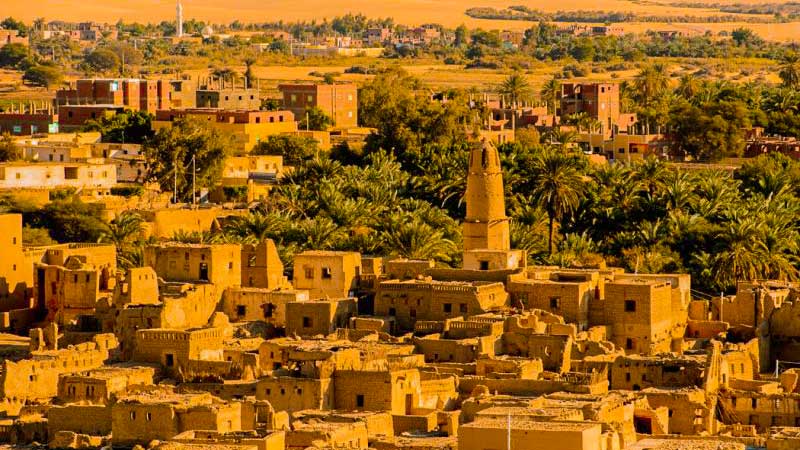
The history of the Oasis started from the prehistoric period, but the pharaonic lived in the Oasis since the 5th dynasty, and from the 6th dynasty, it had its ruler. In Roman times, the Dakhla Oasis was inhabited. The Oasis is mainly divided into two cities, Mut and Al Qasr.
The largest city in the Dakhla Oasis is “Mut,” which means mother in Ancient Egypt and is the capital of the Oasis. It is considered one of the oldest inhabited places in Africa because houses were discovered as early as 13,000 years. Five hundred clay tablets, dating back to the pharaonic period, were also found in the governor’s palace at “Ain Asil” (Balat), in addition to Roman tombs.
The City of Al Qasr was founded in the 11th century in the Islamic era on a Roman fortress’s ruins and was the Oasis’s medieval capital.
If you want to spend the holidays in Egypt, check out our Egypt Vacation Packages & Trips.
Dakhla Oasis Attractions
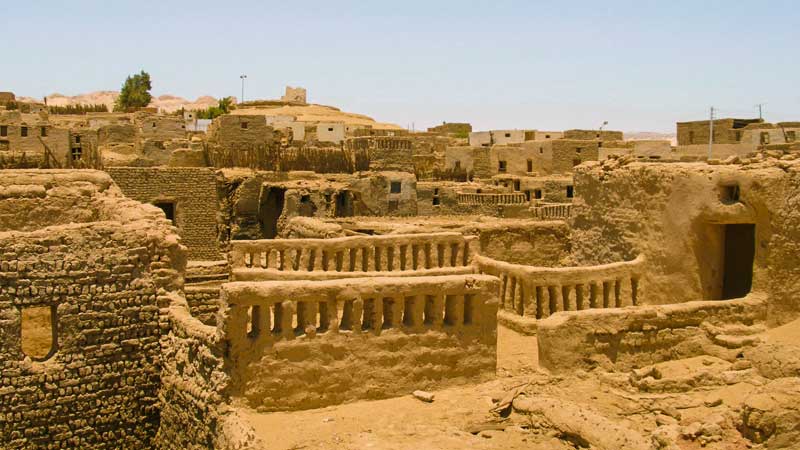
1- Al Qasr is an Islamic city dating back to the medieval Ottoman period. Its streets are narrow, with 5-story houses with Ottoman and Mamluk decorations, carved doors, and lintels.
2- The Tombs of Muzawaka: It is 37 km from Mut and 5 km west of Al Qasr. They date back to Roman times with incredible and preserved decorations and paintings.
3- Bir El Gabel and Bir Talat: It is 25 km north of Mut. They are famous for their hot springs and relaxing atmosphere.
4- Bashandi: A town that dates back to the 19th dynasty and contains pharaonic ruins. The town’s name comes from “Pasha Hindi,” a medieval sheik buried in a local cemetery dating back to Roman times.
5- The Ethnographic Museum: a small museum with an adobe house. The house was divided into three parts: for men, women, and visitors, where there were endless objects.
6- Deir Al Hagar: It is a Roman temple dating back to the time of Nero. The temple was dedicated to the gods Amun, Mut, and Khonsu, and the paintings on its walls are preserved. Later it was converted into a Coptic church until a huge dune destroyed the roof.
0 Comment