


The Kom Ombo Temple in Luxor is a piece of history that has fascinated scholars, historians, and tourists for hundreds of years. It is located in Egypt on the banks of the beautiful Nile River. With its mysterious air and long history, this old temple reminds us of how bright and dedicated the ancient Egyptians were. This article will explore Kom Ombo Temple’s mysterious stories, exciting history, and unique features.
Kom Ombo Temple: A Brief Overview:
Ancient Marvels
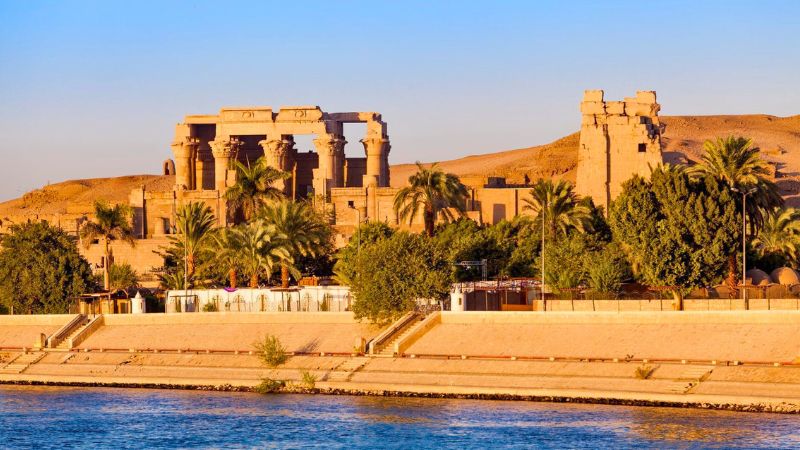
The Kom Ombo Temple, also called the “Temple of Sobek and Haroeris,” is a unique double temple dedicated to two powerful gods: Sobek, the crocodile-headed god, and Haroeris, the falcon-headed god. This temple is in the town of Kom Ombo, Upper Egypt. It is both historically and artistically significant.
Origins of Kom Ombo temple
The Kom Ombo Temple is in the town of Kom Ombo, which is in Upper Egypt. It is near the Nile River. It dates back to the Ptolemaic era, around the 2nd century BCE. However, there is some evidence that a temple or shrine stood on this site long before the Ptolemaic era. During the time of Ptolemy VI Philometor, the temple was built. The Romans afterward added to and changed the temple.
Dual Deity Dedication
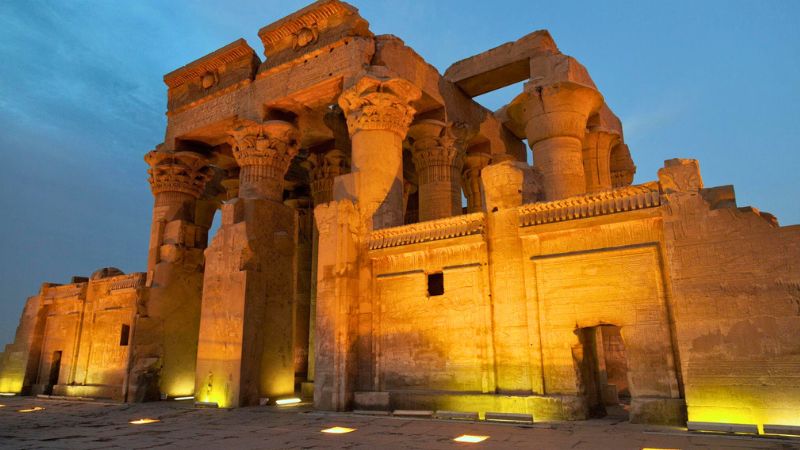
The fact that the Kom Ombo Temple is dedicated to both Sobek and Haroeris makes it different from many other Egyptian temples. Sobek, pictured as a god with a crocodile’s head, was linked to the Nile and its ability to make things grow. Haroeris had the head of a hawk, and he was attached to the sky and the sun. The way the building is built shows that it has a dual purpose. The two-sided form of the Kom Ombo Temple is one of the things that makes it stand out. This building is different from most old Egyptian temples. It has two entrances, two hypostyle halls, and two sanctuaries. This symbolized the two gods it was built to honor, showing they were both important in the area’s faith.
Medical and Healing Center
One of the most exciting things about Kom Ombo Temple is that it has a long history of being used for healing. From what we know about history, the temple may have been a place where people went to get help for their illnesses. People thought that the gifts of Sobek and Haroeris and the fact that the temple was close to the Nile helped people get better. People came to get better from their illnesses and to give gifts to the gods so that they would bless them.
Architectural and Historical Significance:
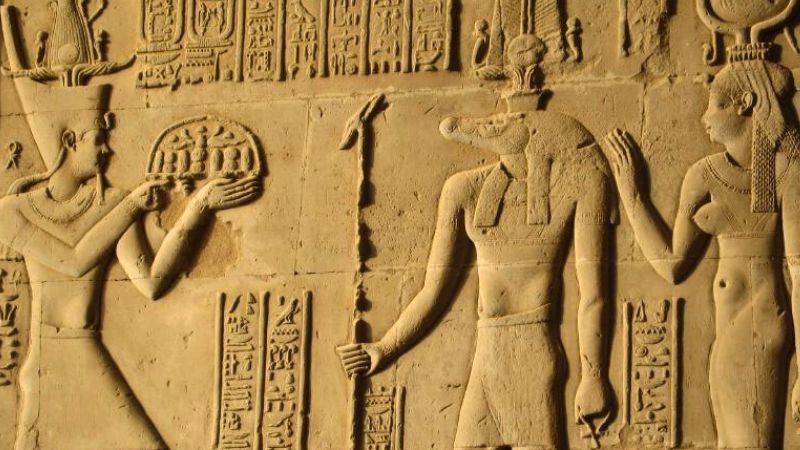
In addition to being a place of worship, the Kom Ombo Temple has a beautiful Egyptian temple design. It has intricate hieroglyphs and reliefs on its walls, showing different parts of ancient Egyptian life, customs, and stories. These writings tell us much about what people believed and how they lived. This makes it an important archaeological and historical place.
The Components of Kom Ombo Temple:
Egypt’s Kom Ombo Temple is a fascinating archaeological site that is known for the unique parts and features of its architecture. Here are the most essential parts of this beautiful temple:
1. Outer Courtyard: The temple structure starts with a large outer courtyard with high walls. Worshipers and travelers used this courtyard as a place to meet up.
2. Twin Entrances: One thing that makes Kom Ombo Temple stand out is that it has two similar entrances, one for each of the temple’s main gods, Sobek and Haroeris. These openings lead into the temple itself, which shows that it has two purposes.
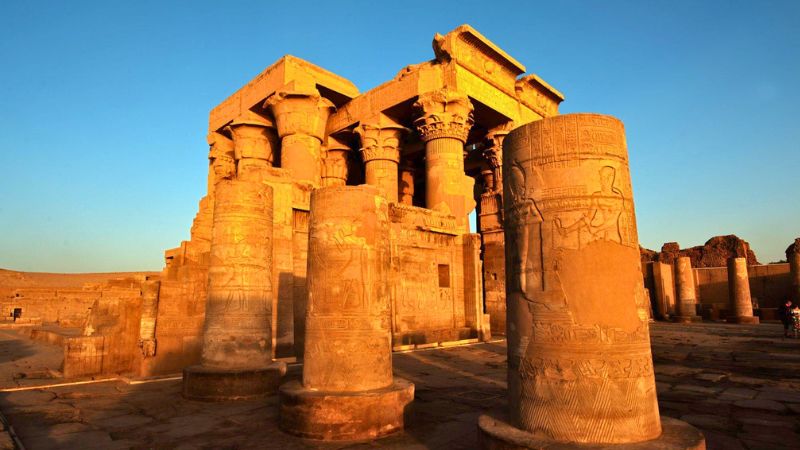
3. Hypostyle Halls: Visitors would go through the entrances and into two different hypostyle rooms, one for Sobek and one for Haroeris. These rooms were held up by columns and had carvings and hieroglyphs all over them. Each hall had columns with different tops, which showed how each god was worshiped differently.
4. Hieroglyphs and Reliefs: On the walls and columns of the building, you can find intricate hieroglyphs and reliefs. These writings show scenes from Egyptian mythology, rituals, and everyday life. They give us important information about the society and religion of the time.
5. Sanctuaries: Inside the Kom Ombo Temple are two shrines, one for Sobek and one for Haroeris. These sanctuaries were the most holy parts of the building because they held statues or cult images of the gods.
6. Inner Chambers: Around the sanctuaries are many rooms and chambers used for religious ceremonies and reasons.
7. Sacred Lake: A holy lake or pool is outside the building. This was a significant part of the temple building because it represented the waters of creation and was used to clean the temple.
8. Crocodile Mummies: Many crocodile mummies near the Kom Ombo Temple may have been among the most exciting. Crocodiles were seen as holy animals because they were connected to Sobek, the crocodile god. Many crocodiles were raised and then mummified as gifts to the god, which shows his importance at Kom Ombo.
9. Central Offering Hall: A central offering hall exists between the two main rooms. This is where priests and worshipers would bring gifts to the gods. There are also altars and other holy items in this room.
10. Surrounding Structures: The temple structure was not on its own but part of a bigger town. Around the temple were office buildings, places for priests to live, and other buildings that helped the temple do its job.
Together, these parts make up the exciting and unique design of the Kom Ombo Temple, which honors both Sobek and Haroeris and is very important in ancient Egypt.
Legends and Mysteries
The Legend of Horus and Sobek
One of the enduring legends associated with the Kom Ombo Temple is the conflict between Horus and Sobek. According to myth, Horus, the god of the sky, and Sobek, the god of the Nile, engaged in a fierce battle. The temple is believed to symbolize their reconciliation, emphasizing the importance of harmony between these two essential aspects of Egyptian life – the sky and the river.
Conclusion
In conclusion, the Kom Ombo Temple is a fascinating example of ancient Egypt’s rich history and culture. It has a double shape, is linked to healing, has unique features, and is shrouded in mystery, making it a must-see for anyone interested in Egyptology and history. This beautiful temple shows how much ancient Egypt still fascinates and amazes people in the modern world.
0 Comment