


The Saladin Citadel & Mohammad Ali Mosque in Cairo
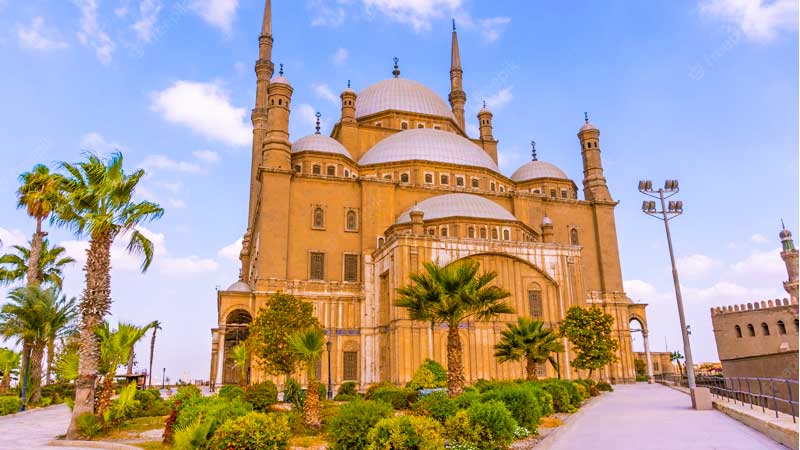
One of the most famous Islamic places in Cairo and Egypt is the Saladin Citadel & Mohammad Ali Mosque ( also known as The Citadel of Cairo). The Citadel is a leading tourist destination due to its historical importance and architectural beauty like the Pyramids of Giza
The Cairo Citadel was considered a city in another, one of the most attractive medieval structures. It is known as the Citadel of Muhammad Ali because its mosque is the most prominent and luxurious building in the Citadel. Since the Citadel of Saladin was constructed in the 12th century, kings and rulers built structures such as museums, royal palaces, and impressive mosques.
The History of Saladin’s Citadel in Cairo
Saladin was the first ruler of the Ayyubid dynasty. He ruled Egypt from 1171 to 1193 and was in Cairo for almost eight years. To protect Old Cairo from the Crusaders, Saladin built a wall that surrounded the two capitals, Old Cairo (the Fatimid capital) and Fustat (the first Arab capital). Later Saladin ordered his Vizier, Bahaa El-Din Karakosh, to build a citadel on Mount Moqatam to be a refuge if the enemies conquered Cairo and to be his royal residence.
The Vizier Bahaa El-Din destroyed the buildings and tombs in this place and began the construction of the Citadel of Cairo. Saladin died in 1193 before finishing the structure of the Cairo Citadel. The Vizier of him completed the building in 1204 AD El-Malek El-Adel (Saladin’s nephew) was the first resident of the Citadel. When the French arrived in 1798, they destroyed many parts of the Citadel.
During the Mamluk era, the sultans built some palaces and mosques. In 1830 Muhammad Ali made a Mosque named after him (the most famous place in the Citadel). Saladin Citadel was the administrative center and royal residence for 700 years until the Khedive Ishmael built the Abdin Palace in the 1860s; the Citadel maintained its military importance until the 1970s. In 1882 it was the center of the British Army. Since 1983 it has been under the control of the Egyptian Antiquities Authority.
In 1830 Muhammad Ali built a Mosque in his name (the most famous place in the Citadel). Saladin Citadel was the administrative center and royal residence for 700 years until the Khedive Ishmael built the Abdin Palace in the 1860s; the Citadel maintained its military importance until the 1970s.
In 1882 it was the center of the British Army. Since 1983 it has been under the control of the Egyptian Antiquities Authority. In 1830 Muhammad Ali built a Mosque in his name (the most famous place in the Citadel). Saladin Citadel was the administrative center and royal residence for 700 years until the Khedive Ishmael built the Abdin Palace in the 1860s; the Citadel maintained its military importance until the 1970s. In 1882 it was the center of the British Army. Since 1983 it has been under the control of the Egyptian Antiquities Authority.
History of Mohammad Ali Mosque:
Dedicated for the first time in 1848, the Muhammad Ali Mosque was built using a particular Ottoman architectural style. Found atop the Salah el-Din Citadel’s tallest tower. The mosque’s interior is split in half, with the prayer area (called the “house of prayer”) placed in the eastern half and the “courtyard” in the western half. Since Turkish architect Yusuf Boshnak was responsible for designing this mosque, it follows the architectural style of traditional Turkish mosques. The limestone foundation and walls of this mosque are its most distinguishing features. The mosque has two minibars, and the dome is adorned with six medallions. Among the names inscribed on these medallions are Allah, Mohammed, and the four righteous Caliphs Abou Bakr, Omar, Othman, and Ali.
0 Comment